


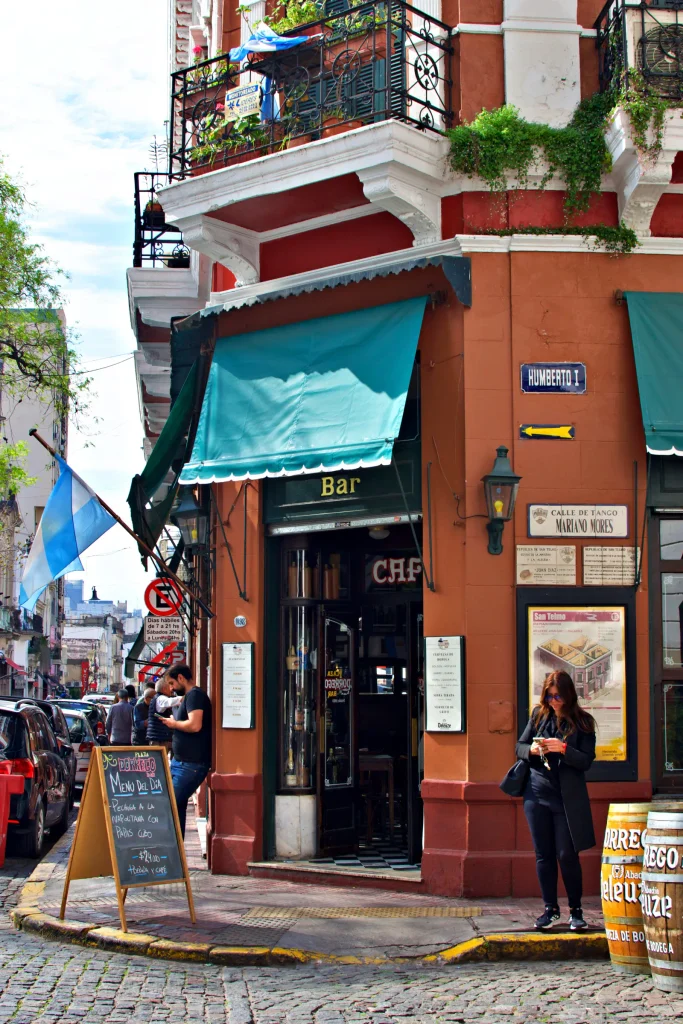
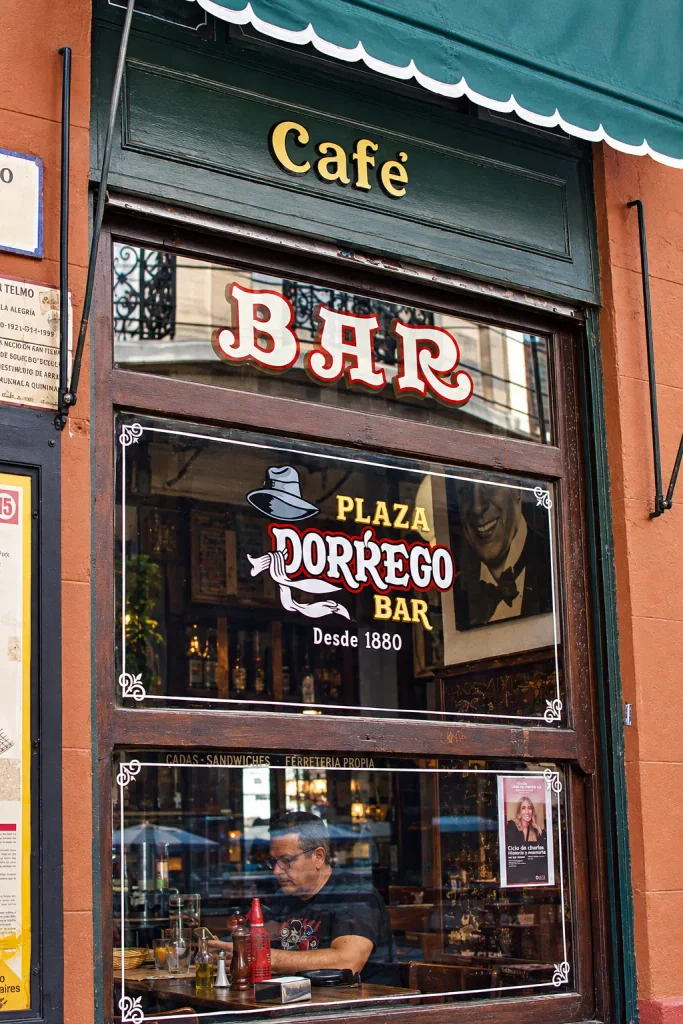
En el corazón de San Telmo, frente a Plaza Dorrego, volvió a abrir sus puertas Plaza Dorrego Bar, un lugar que forma parte de la historia de uno de los barrios más emblemáticos de Buenos Aires. Desde 1880 fue escenario de encuentros, conversaciones y generaciones enteras que pasaron por sus mesas. Y hay algo que se percibe apenas se cruza la puerta: el pasado no quedó congelado. Sigue siendo parte del presente.
La reapertura encontró una forma inteligente de actualizar el espacio sin borrar su identidad. El carácter del lugar aparece en cada rincón: en los ladrillos a la vista, en los objetos que sobreviven al paso de los años y en un mobiliario que fue cuidadosamente preservado. Caminar por Plaza Dorrego Bar es también recorrer una parte de la historia de San Telmo.
Más que un bar para tomar un café al paso, el lugar invita a sentarse, mirar alrededor y quedarse un rato. Y quizás eso sea también parte del encanto de San Telmo: recorrer sus calles empedradas, mirar sus edificios, descubrir sus bares y perderse un poco por lugares que muchas veces quedan fuera del recorrido más turístico.
Hablamos con Ariel, gerente del lugar, quien nos contó sobre el desafío de devolverle vida a un espacio con tanta historia y la responsabilidad que implica hacerse cargo de un lugar tan querido por vecinos y visitantes. También conversamos con Nicolás, encargado del bar, cuya pasión por el proyecto aparece rápidamente en cada relato. Mientras recorre el salón y comparte anécdotas, transmite el entusiasmo de formar parte de esta nueva etapa.
Las historias también forman parte de la experiencia. Pero lo más interesante, quizás no sea solamente lo que llega a la mesa. Las historias aparecen por todos lados. Algunas están a la vista; otras surgen en las conversaciones con quienes conocen el lugar desde hace años.Entre ellas está la de Juan Carlos Pallarols, el reconocido orfebre argentino que tiene su taller a pocos metros del bar. Vecino de toda la vida, suele compartir recuerdos y anécdotas ligadas al barrio. Una de ellas remite a un encuentro entre Jorge Luis Borges y Ernesto Sabato en este mismo lugar, una escena que ayuda a imaginar la vida cultural que alguna vez pasó por estas mesas.
La memoria también quedó marcada físicamente en el bar. Muchas mesas conservan nombres, iniciales y pequeñas inscripciones realizadas por clientes décadas atrás. No son pocos los que vuelven tiempo después para buscarlas y reencontrarse con una parte de su propia historia.
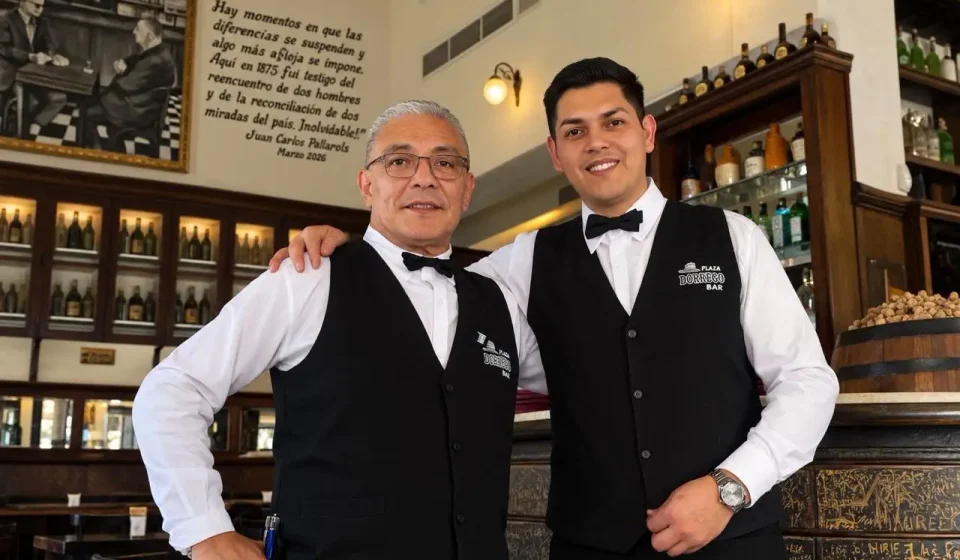
Los mozos también son parte del lugar.
Hay algo que no se puede recuperar simplemente restaurando un salón: la gente que hizo del bar su lugar de trabajo durante años. Gustavo, por ejemplo, lleva alrededor de 40 años trabajando como mozo. Con su uniforme impecable, una sonrisa permanente y hasta algún tango cantado mientras suena la música de fondo, representa esa tradición de los bares porteños donde los mozos también terminan siendo parte de la historia del lugar.
Y no es solo una cuestión de antigüedad. Hay una forma de conocer el bar que se construye con los años: saber quién se sienta en cada mesa, reconocer a los habitués, recordar historias y entender los tiempos de un lugar que funciona mucho más allá de lo que pasa en la cocina o detrás de la barra.
Una propuesta gastronómica para quedarse.
La renovación también llegó a la cocina y a la imponente barra, con una propuesta amplia, abundante y pensada para acompañar distintos momentos del día: desde un café hasta una comida completa.
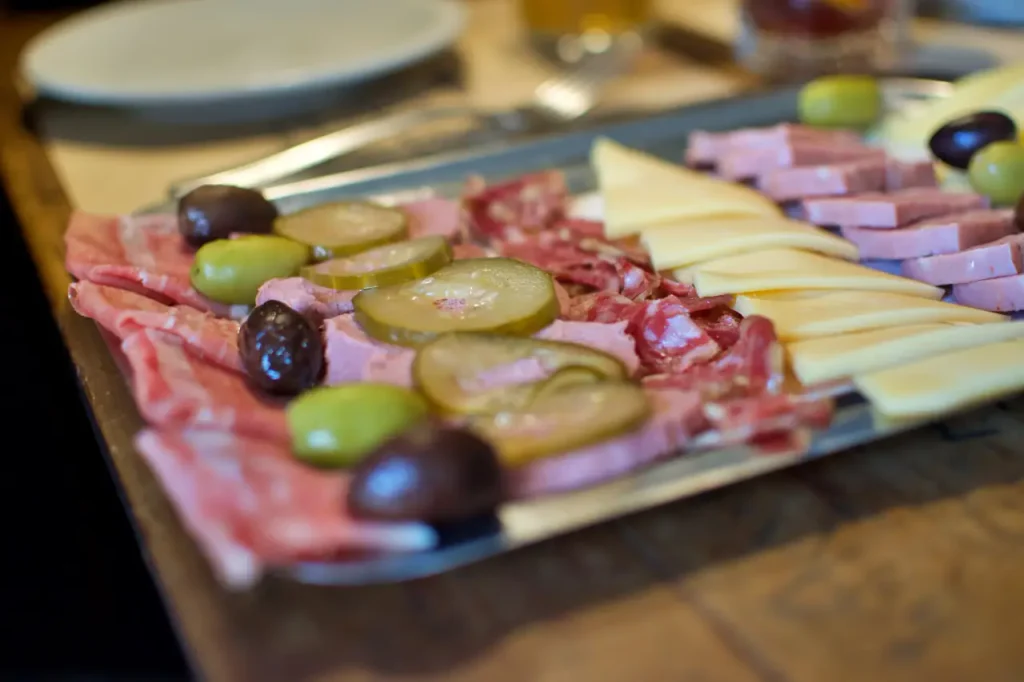
Nuestra visita comenzó con una picada generosa para compartir, acompañada por vermut y bebidas de elaboración propia. También hay cerveza y una carta que combina clásicos de bar con opciones más especiales
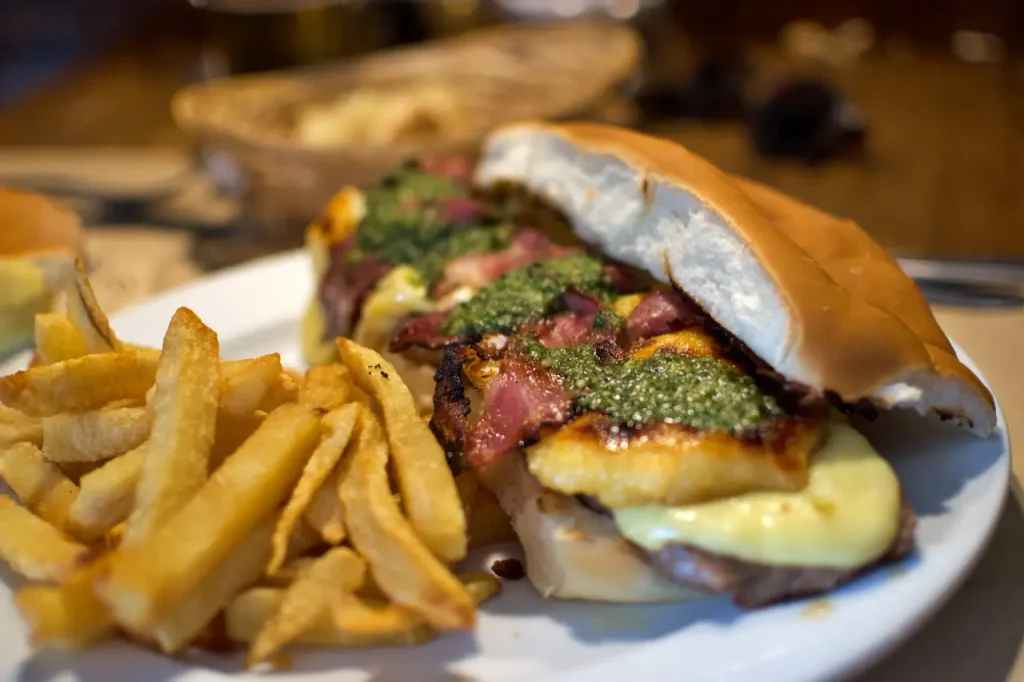
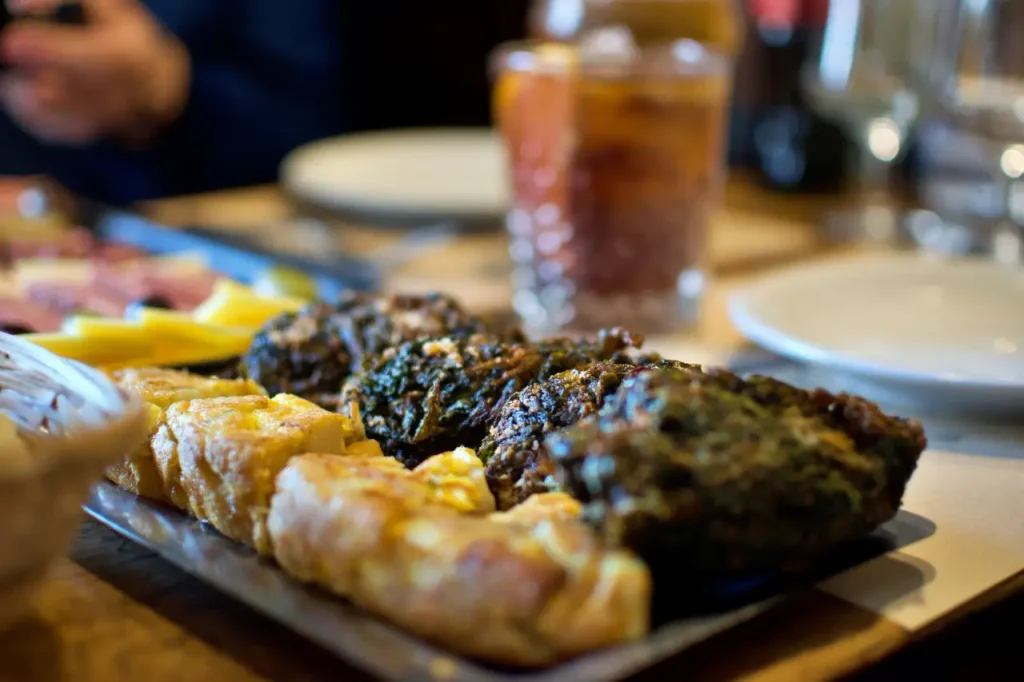
Entre los platos que probamos, el sándwich de lomito fue uno de los grandes destacados: contundente, sabroso y con una muy buena relación precio-calidad. También hay opciones vegetarianas y una tortilla de papas enorme que ya se ganó su lugar entre los favoritos de quienes frecuentan el bar.
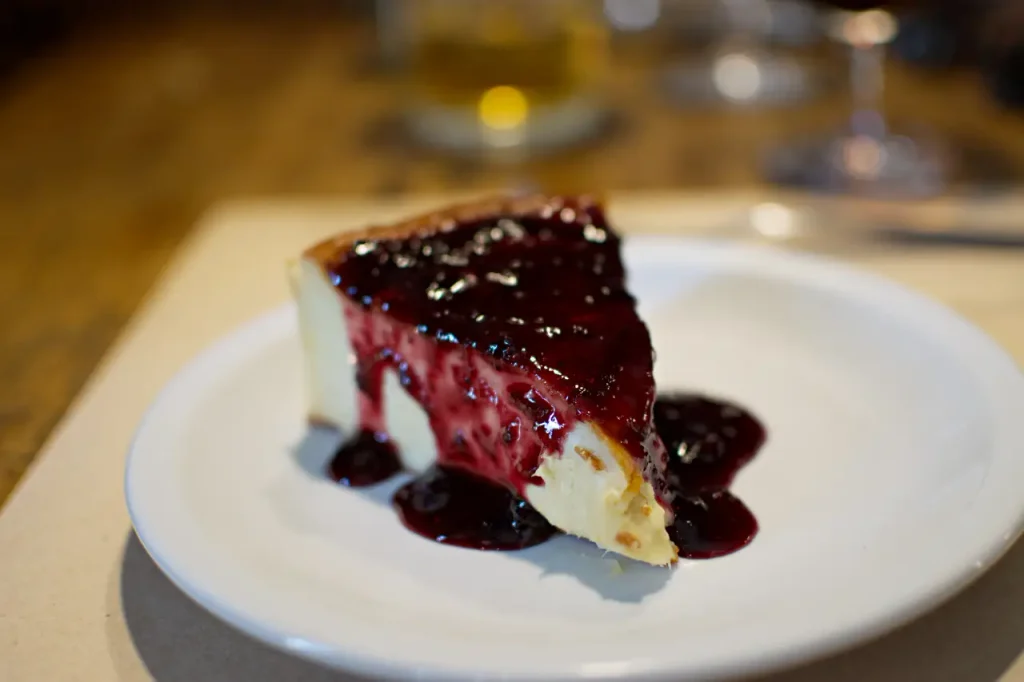
Y después llegan los postres. Muchos y tentadores. De esos que hacen difícil elegir uno solo. La torta vasca y el tiramisú fueron dos de nuestros favoritos: abundantes, bien ejecutados y una buena muestra de que la propuesta gastronómica está a la altura de la historia del lugar.
Porque San Telmo no es solo la feria de los domingos. Es un barrio que parece moverse entre distintas épocas: tiene algo vintage, algo retro, mucha historia y, al mismo tiempo, una escena actual que lo mantiene vivo. Hay cierta nostalgia en sus calles, pero no es un barrio detenido en el tiempo. Y quizás ahí esté justamente su encanto.
Plaza Dorrego Bar atrae a turistas todos los días, pero el barrio también se sostiene en sus vecinos y en quienes lo conocen desde hace años. Por eso, la reapertura fue también una buena noticia para muchos habitués, que volvieron a ocupar sus mesas y a encontrarse con un lugar que sienten propio.
Dorrego Bar: A San Telmo Classic Reinvented Without Losing Its Essence
In the heart of San Telmo, right across from Plaza Dorrego, Plaza Dorrego Bar has reopened its doors. The bar has been part of the history of one of Buenos Aires’ most emblematic neighborhoods for generations. Since 1880, it has been a setting for encounters, conversations and countless stories shared around its tables. And there is something you notice as soon as you walk through the door: the past hasn’t been frozen in time. It is still very much part of the present.
The reopening found a way to update the space without erasing its identity. Its character can be felt in every corner: in the exposed brick, the objects that have survived the passing years and the carefully preserved furniture. Walking through Plaza Dorrego Bar is also a way of walking through a piece of San Telmo’s history.
More than a place to stop for a quick coffee, it is the kind of bar that invites you to sit down, look around and stay for a while. And perhaps that is also part of San Telmo’s charm: walking its cobblestone streets, looking up at its buildings, discovering its bars and getting a little lost among places that often fall outside the more touristy routes.
We spoke with Ariel, the bar’s manager, who told us about the challenge of bringing a place with so much history back to life, and the responsibility that comes with taking care of a space so beloved by both locals and visitors. We also spoke with Nicolás, the bar’s manager, whose passion for the project quickly comes through in every story he shares. As he walks through the space and recalls different anecdotes, you can feel how excited he is to be part of this new chapter.
The Stories Are Part of the Experience, Too
But perhaps the most interesting thing about the bar is not only what arrives at the table. Stories are everywhere. Some are right there in front of you; others emerge in conversations with people who have known the place for years.
One of them is the story of Juan Carlos Pallarols, the renowned Argentine silversmith whose workshop is just a few steps from the bar. A lifelong San Telmo resident, he often shares memories and anecdotes connected to the neighborhood. One of them recalls a meeting between Jorge Luis Borges and Ernesto Sabato at this very bar, a story that helps us imagine the cultural life that once unfolded around these tables.
The bar’s history has also been physically preserved. Many of the tables still bear names, initials and small inscriptions left by customers decades ago. Some people even return years later to look for their names and reconnect with a small piece of their own history.
The Waiters Are Part of the Place, Too
There is something you cannot recreate simply by restoring a room: the people who have made the bar their workplace for years.
Gustavo, for example, has been working as a waiter here for around 40 years. With his impeccable uniform, permanent smile and even the occasional tango he sings while music plays in the background, he represents a tradition that is deeply connected to Buenos Aires’ historic bars, where waiters often become part of the identity and history of the place themselves.
And it is not just about how long they have been there. There is a particular way of knowing a bar that can only come with time: knowing who sits at each table, recognizing regulars, remembering stories and understanding the rhythm of a place that extends far beyond what happens in the kitchen or behind the bar.
A Food & Drink Experience Worth Staying For
The renovation also reached the kitchen and the impressive bar, with a broad and generous menu designed to work for different moments of the day, from a coffee to a full meal.
Our visit started with a generous sharing platter, accompanied by vermouth and house-made drinks. There is also beer and a menu that combines classic bar dishes with more elaborate options.
Among the dishes we tried, the lomito sandwich was one of the highlights: hearty, flavorful and offering very good value for money. There are also vegetarian options and a huge potato omelet that has already become a favorite among regulars.
And then come the desserts. Plenty of them, and all tempting. The kind that makes choosing just one difficult. The Basque cheesecake and tiramisu were two of our favorites: generous, well made and proof that the food offering is more than worthy of the history surrounding the place.
Because San Telmo is not just about the Sunday antiques fair. It is a neighborhood that seems to move between different eras: there is something vintage, something retro, plenty of history and, at the same time, a contemporary scene that keeps it alive. There is a certain nostalgia in its streets, but it is not a neighborhood frozen in time. And perhaps that is precisely its charm.
Plaza Dorrego Bar attracts tourists every day, but the neighborhood also belongs to its residents and to those who have known it for years. That is why the reopening was also good news for many regulars, who have returned to their usual tables and to a place they feel is part of their own neighborhood.