

Jazz, escenarios internacionales y una vocación que sigue intacta. En Jazz Voyeur Club, el cantante argentino, Mike Sinagra, recorre el universo de Frank Sinatra sin perder de vista a sus grandes maestros, reivindica el swing y recuerda cómo una serie de encuentros inesperados lo llevó a construir una vida alrededor de la música.
Una noche de jazz en el subsuelo de Recoleta
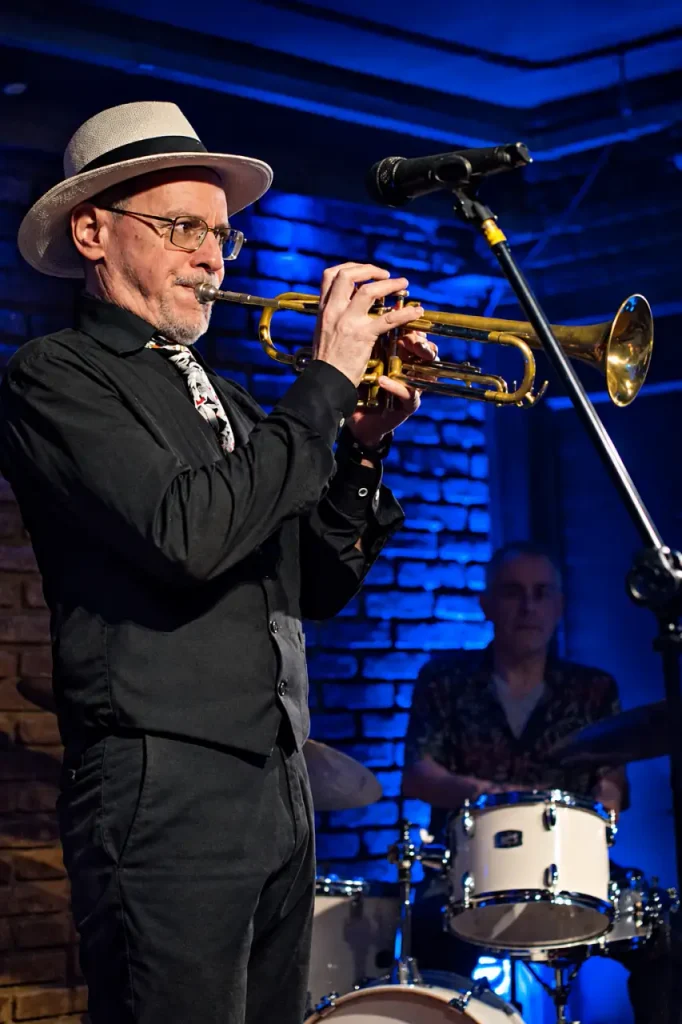
Hay lugares donde la música funciona como telón de fondo y otros donde se convierte en el centro de todo. Jazz Voyeur Club pertenece a la segunda categoría. En el subsuelo del Meliá Recoleta Plaza, este club combina música en vivo, coctelería de autor y cocina de inspiración mediterránea en un ambiente íntimo, de luces bajas y músicos a pocos metros de las mesas. Con capacidad para alrededor de 55 personas, tiene algo de aquellos clubes de jazz neoyorquinos donde cada interpretación sucede cerca del público y la noche adquiere su propio ritmo.
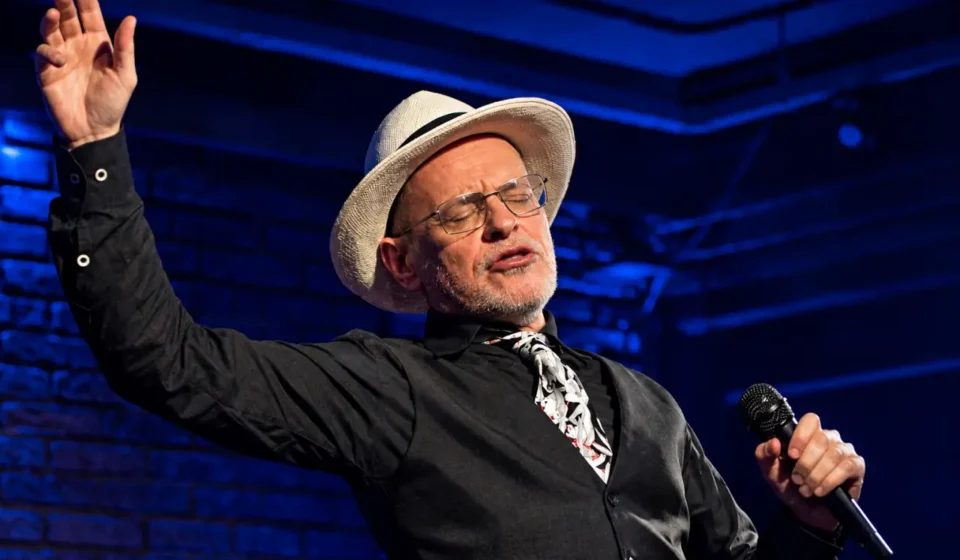
La programación recorre distintos territorios del género, desde el jazz clásico y el swing hasta el blues, el funk y los sonidos de Nueva Orleans. Entre sus propuestas se encuentra Sinatra & Friends, con Mike Sinagra al frente de una interpretación que recupera el repertorio de Frank Sinatra desde la personalidad de un crooner y su conexión con los músicos que lo acompañan.
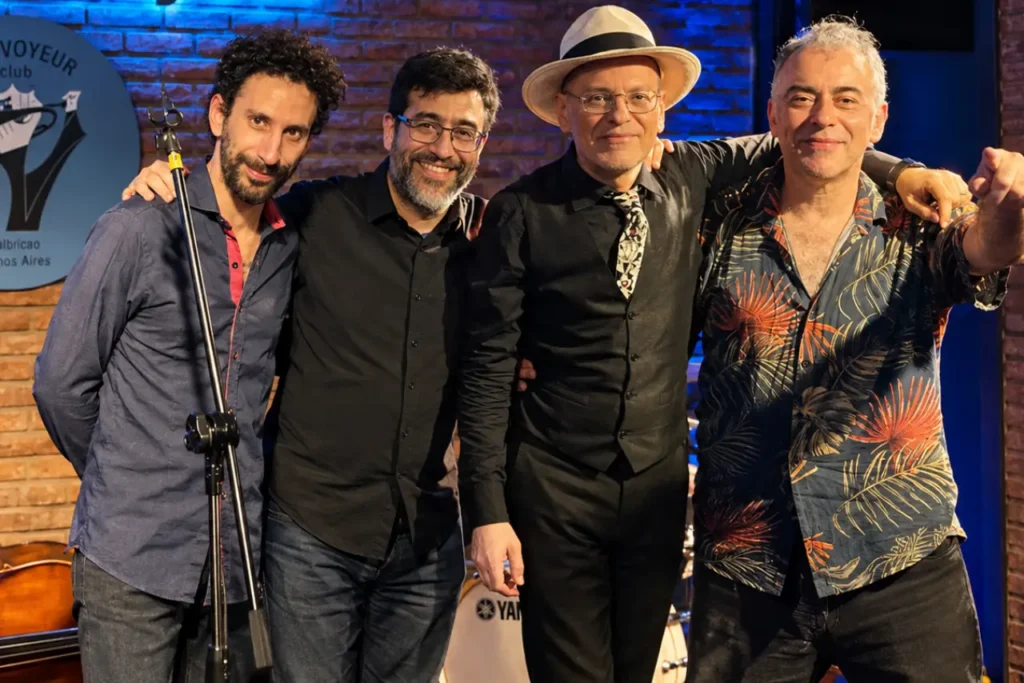
La noche que visitamos el lugar, algo quedó claro: el espectáculo no depende solamente de una voz. La banda tiene un papel fundamental, con músicos que sostienen el swing, dialogan entre sí y construyen ese sonido que hace que el jazz suceda en tiempo real. La calidad de cada interpretación y la complicidad entre los integrantes son parte de la experiencia.
Pero detrás de cada show hay historias que no siempre se conocen. La de Mike Sinagra comienza mucho antes de Sinatra & Friends, con un padre, un disco de Benny Goodman y una vocación que fue encontrando su camino casi sin proponérselo.
¿Cómo empezó tu relación con el jazz?
Mi relación con el jazz empezó en la adolescencia, junto a mi padre, que era fanático de Benny Goodman. Todo comenzó con uno de sus discos. Sinatra apareció después, en un club de jazz muy conocido de Buenos Aires que ya no existe. Alguien me escuchó cantar durante una jam session y, por mi apellido, me propuso empezar a hacer un show con canciones de Frank.
Así nació, en 2011, la primera banda con la que hice ese repertorio. Tocamos en aquel club durante tres años consecutivos, hasta 2014. En ese momento nunca imaginé que podría dedicarme exclusivamente a ser un crooner de jazz. Sin embargo, mirando hacia atrás, creo que mi subconsciente siempre soñó con ser ese personaje que veía junto a mi padre en las películas de Sinatra, especialmente cuando cantaba. La historia tiene algo de esas coincidencias que terminan definiendo un camino. Lo que empezó como una invitación se convirtió en una profesión y, con el tiempo, en una forma de vida.
Cantar para vivir
El punto de inflexión llegó en 2015, cuando lo contrataron para cantar durante un año entero en un hotel de otro país. Fue la primera oportunidad que le permitió imaginar que la música podía sostenerlo profesionalmente. Pero el recorrido no fue lineal ni respondió a una fórmula. Antes de llegar a nuevos escenarios, Mike salió a cantar a la vía pública. Esa experiencia le abrió puertas y lo llevó a conocer otros lugares.
Una de las historias que recuerda ocurrió en Berlín. “Estaba cantando sobre un puente ferroviario cuando unos jóvenes alemanes lo contrataron para interpretar canciones de Sinatra en una feria internacional en la que participaban personas de distintos países”
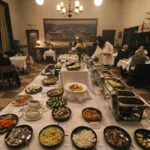
Allí probó comidas de diferentes culturas y compartió escenario con músicos de África, Europa y América. Un episodio inesperado que resume bastante bien su recorrido: estar dispuesto a cantar donde se presente la oportunidad y descubrir qué puede surgir de ese encuentro
¿Qué diferencias encontrás entre el público argentino y el de otros países?
Ninguna. El público es igual de atento y apasionado cuando le gustan las canciones de Sinatra.
Para Mike, la conexión no depende tanto de la geografía como de la música. Las canciones atraviesan idiomas y generaciones, y una interpretación puede generar la misma respuesta en públicos muy distintos. Sinatra, Louis Armstrong y el secreto del swing
“Interpretar a Frank Sinatra implica acercarse a una figura enorme de la música popular. Su voz, su personalidad y sus arreglos forman parte de una tradición que sigue vigente décadas después de sus grabaciones más célebres”
Sin embargo, Mike no piensa su trabajo en términos de imitación. “Nunca pienso que estoy imitando a Sinatra o a cualquier otra figura del jazz. Solo pienso en cantar y tocar con swing desde la primera nota que toqué en mi vida”.
Para Mike, Armstrong ocupa un lugar fundamental en la historia del género. Lo considera el gran referente de Sinatra y de todos aquellos que intentan cantar o tocar jazz. Su influencia va mucho más allá de una manera de frasear: está en la libertad, el ritmo y la personalidad que cada intérprete pone en la música.
Con los años, también cambió su propia voz. Mike siente que fue encontrando un sonido más cercano a la esencia del jazz, con un color vocal acorde al repertorio que interpreta. Es un proceso que, según explica, puede llevar toda una vida.
Y hay algo más que aprender: manejar el escenario y comprender que un músico no es solamente alguien que canta o toca un instrumento, sino también alguien que debe conectar con una audiencia. La experiencia, entonces, no se mide únicamente en notas acertadas. También está en saber acompañar a los demás músicos, sostener el clima de una canción y entender qué sucede del otro lado del escenario.
En un género donde la interacción entre los instrumentos es esencial, cada integrante tiene una responsabilidad. El resultado depende del trabajo colectivo, de la escucha y de la preparación, pero también de la capacidad de resolver lo inesperado.
Por eso, en un show como Sinatra & Friends, la banda merece una atención especial. Detrás de la voz que conduce el repertorio hay músicos que aportan matices, sostienen los arreglos y hacen posible que las canciones respiren con personalidad propia.
Nueva York como canción pendiente.
Aunque ha viajado y cantado en distintos países, Mike todavía tiene una ciudad pendiente: Nueva York. Por ahora, la conoce a través de una de las canciones más emblemáticas de Sinatra. Disfruta interpretando New York, New York en cada show, mientras espera algún día poder conocer personalmente la ciudad que se convirtió en un símbolo de ambición, reinvención y grandes escenarios.
Cuando le preguntamos en qué escenario del mundo le gustaría tocar, no duda: el Teatro Ópera de Buenos Aires, donde Louis Armstrong se presentó con sus All Stars en 1957.
¿Qué te gustaría hacer musicalmente que todavía no hayas podido concretar?
Nada. Toda la música que amo la he podido cantar ante el público y junto a los extraordinarios músicos con los que tengo la enorme suerte de interactuar .
La noche no se trata solamente de recordar a una leyenda. Se trata de mantener viva una tradición musical, interpretarla desde el presente y descubrir que canciones grabadas hace décadas todavía pueden convocar, emocionar e incluso hacer bailar a quienes las escuchan.
Quizás esa sea una de las claves de los buenos clubes de jazz: no convertir la música en una pieza de museo, sino permitir que vuelva a suceder cada noche. Y mientras haya canciones por cantar, una banda dispuesta a tocar y alguien del otro lado de la mesa que se deje llevar por el swing, la historia seguirá escribiéndose en vivo.
Mike Sinagra
IG: @mikesinagra
Youtube: @mikesinagra
At Jazz Voyeur Club, Argentine singer Mike Sinagra explores the world of Frank Sinatra while honoring the great masters who came before him. A champion of swing, he looks back on a series of unexpected encounters that led him to build a life around music.
A Night of Jazz in the Basement of Recoleta
Some places use music as a backdrop; others make it the center of everything. Jazz Voyeur Club belongs to the latter category.
Located in the basement of the Meliá Recoleta Plaza, this club combines live music, signature cocktails, and Mediterranean-inspired cuisine in an intimate setting, with low lighting and musicians performing just a few feet from the tables. With a capacity of around 55 guests, it evokes the atmosphere of New York jazz clubs, where every performance unfolds close to the audience and the night develops its own rhythm.
The program explores different sides of the genre, from classic jazz and swing to blues, funk, and the sounds of New Orleans. One of its featured shows is Sinatra & Friends, with Mike Sinagra at the forefront, bringing Frank Sinatra’s repertoire to life through the personality of a crooner and his connection with the musicians accompanying him.
On the night we visited, one thing became clear: the show depends on far more than a single voice. The band plays an essential role, with musicians who sustain the swing, interact with one another, and create the sound that makes jazz happen in real time. The quality of each performance and the chemistry among the musicians are integral to the experience.
But behind every show are stories that audiences do not always get to hear. Mike Sinagra’s story began long before Sinatra & Friends, with his father, a Benny Goodman record, and a passion that gradually found its own direction, almost without him realizing it.
How did your relationship with jazz begin?
My relationship with jazz began in my teens, alongside my father, who was a huge Benny Goodman fan. It all started with one of his records. Sinatra came later, at a well-known jazz club in Buenos Aires that no longer exists. Someone heard me singing during a jam session and, because of my last name, suggested that I start performing a show featuring Frank Sinatra’s songs.
That was how, in 2011, the first band I formed to perform that repertoire came together. We played at that club for three consecutive years, until 2014. At the time, I never imagined I could make a living exclusively as a jazz crooner. Looking back, though, I think my subconscious had always dreamed of becoming that character I watched alongside my father in Sinatra’s movies, especially when he was singing.
There is something about this story that reflects how coincidences can end up defining a path. What began as an invitation became a profession and, eventually, a way of life.
Making a Living Through Music
The turning point came in 2015, when Mike was hired to sing for an entire year at a hotel abroad. It was the first opportunity that allowed him to imagine that music could sustain him professionally. But his journey was neither linear nor guided by a formula. Before reaching new stages, Mike took to the streets to sing. That experience opened doors and led him to discover new places.
One of the stories he remembers took place in Berlin.
“I was singing on a railway bridge when some young Germans hired me to perform Sinatra songs at an international fair attended by people from different countries.”
There, he sampled food from different cultures and shared the stage with musicians from Africa, Europe, and the Americas. It was an unexpected episode that captures his journey quite well: being willing to sing wherever an opportunity arises and discovering what might come from that encounter.
Do you notice any differences between Argentine audiences and audiences in other countries?
None. Audiences are just as attentive and passionate when they enjoy Sinatra’s songs.
For Mike, the connection has less to do with geography than with music itself. Songs cross languages and generations, and a performance can elicit the same response from very different audiences.
Sinatra, Louis Armstrong, and the Secret of Swing
Interpreting Frank Sinatra means approaching a towering figure in popular music. His voice, personality, and arrangements are part of a tradition that remains alive decades after his most celebrated recordings.
Mike, however, does not think of his work in terms of imitation.
“I never think that I’m imitating Sinatra or any other jazz figure. I just think about singing and playing with swing, from the very first note I ever played in my life.”
For Mike, Louis Armstrong holds a fundamental place in the history of jazz. He considers Armstrong a major influence on Sinatra and on anyone who attempts to sing or play jazz. His influence goes far beyond phrasing: it lies in the freedom, rhythm, and personality each performer brings to the music.
Over the years, Mike’s own voice has evolved, too. He feels he has gradually found a sound closer to the essence of jazz, with a vocal tone that suits the repertoire he performs. As he explains, that process can take a lifetime.
There is also another skill to master: commanding the stage and understanding that a musician is not simply someone who sings or plays an instrument, but someone who must connect with an audience.
Experience, then, is not measured solely by hitting the right notes. It also means knowing how to support fellow musicians, maintain the mood of a song, and understand what is happening on the other side of the stage.
In a genre where interaction between instruments is essential, every band member has a responsibility. The result depends on teamwork, attentive listening, and preparation, but also on the ability to respond to the unexpected.
That is why, in a show like Sinatra & Friends, the band deserves special attention. Behind the voice leading the repertoire are musicians who add nuance, support the arrangements, and allow each song to breathe with a personality of its own.
New York: A Song Still Waiting to Happen
Although he has traveled and performed in several countries, there is still one city on Mike’s list: New York. For now, he knows it through one of Sinatra’s most iconic songs. He enjoys performing New York, New York at every show while hoping that one day he will get to experience the city in person—a place that has become a symbol of ambition, reinvention, and legendary stages.
When we ask which stage in the world he would most like to perform on, his answer is immediate: the Teatro Ópera in Buenos Aires, where Louis Armstrong performed with his All Stars in 1957.
What would you still like to accomplish musically?
Nothing. I’ve been able to sing all the music I love in front of audiences and alongside the extraordinary musicians I’m incredibly fortunate to work with.
The night is not simply about remembering a legend. It is about keeping a musical tradition alive, interpreting it in the present, and discovering that songs recorded decades ago can still bring people together, move them, and even make them dance.
Perhaps that is one of the secrets of a great jazz club: not turning music into a museum piece, but allowing it to happen all over again every night. And as long as there are songs to sing, a band ready to play, and someone on the other side of the table willing to surrender to the swing, the story will continue to be written live.