
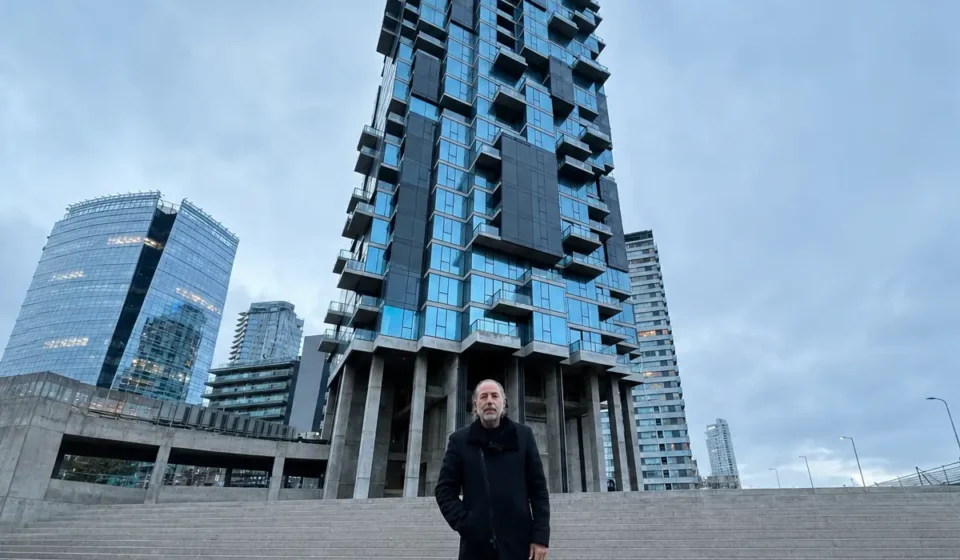

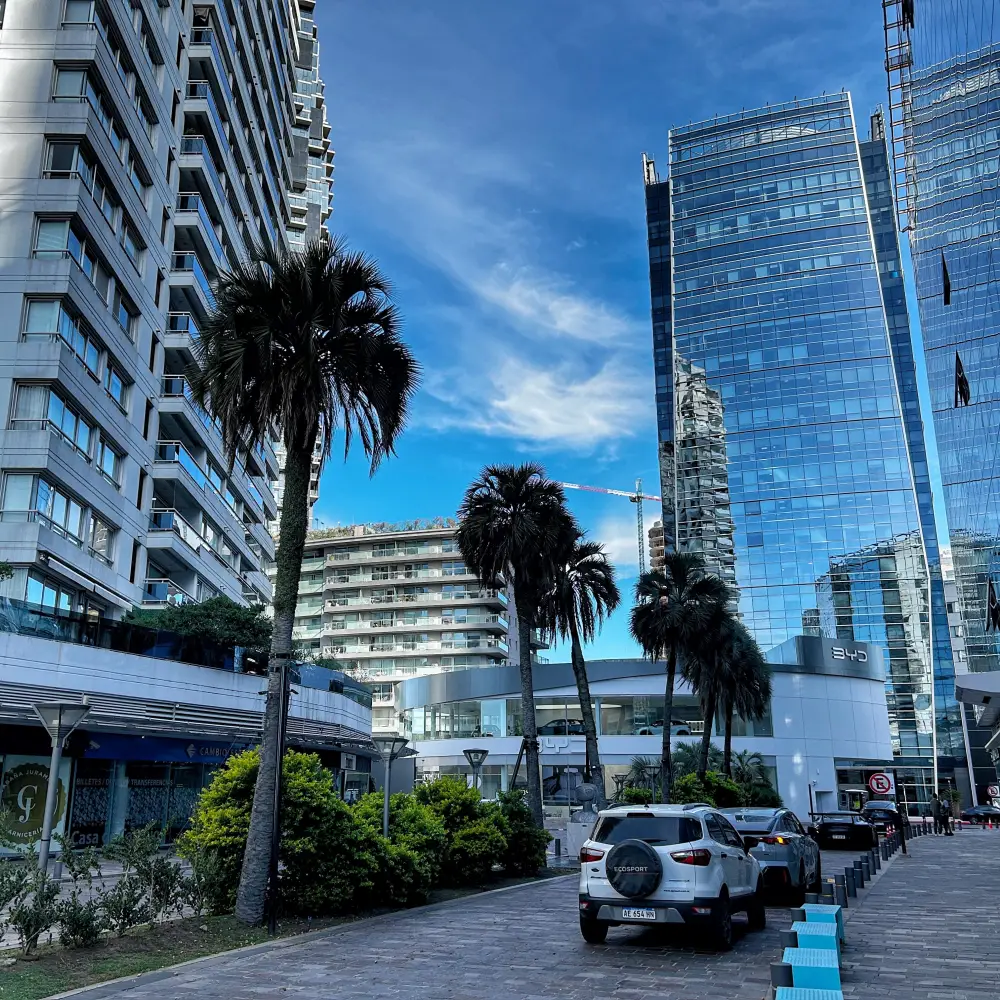
Puerto Madero cambia a una velocidad difícil de seguir. Uno camina por la zona, vuelve unos meses después y algo nuevo apareció: una torre, un restaurante, un hotel, un espacio de trabajo. La sensación es extraña: como si dentro de Buenos Aires estuviera creciendo otra ciudad. Cuando empecé a caminar por lo que hoy es Madero Harbour quise entender qué estaba pasando ahí. Quién estaba detrás de esas cinco manzanas en transformación y, sobre todo, qué había imaginado antes de que todo esto existiera. La respuesta lleva directamente a la familia Ginevra.
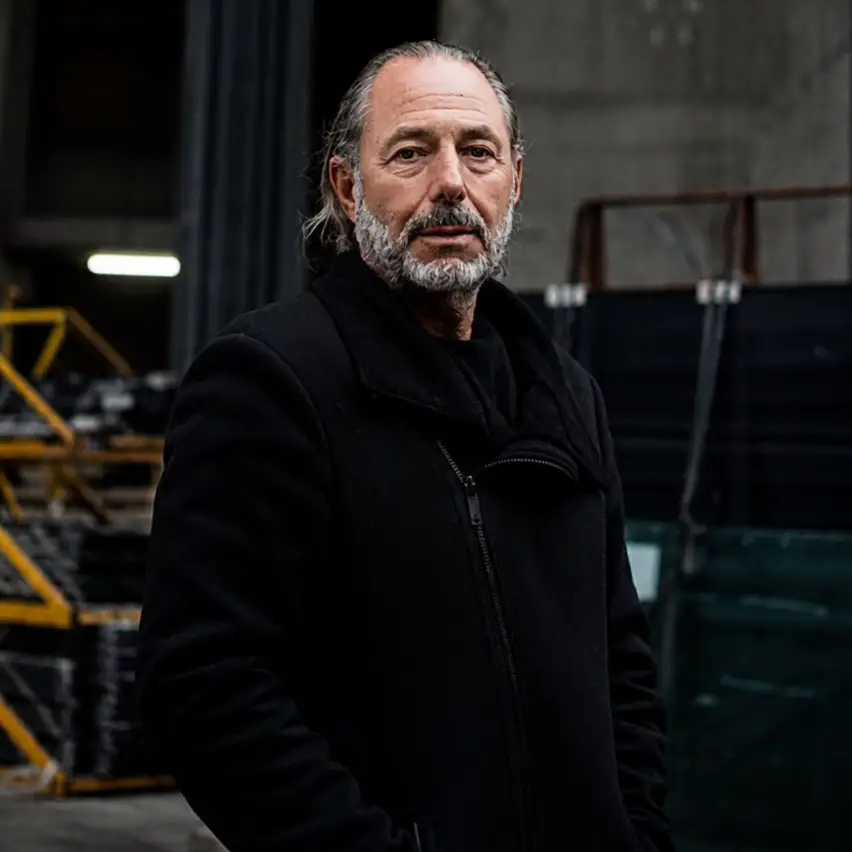
Alejandro Ginevra es empresario y desarrollador inmobiliario, pero su historia con Puerto Madero comenzó mucho antes de que el barrio se convirtiera en uno de los lugares más exclusivos de Buenos Aires. Su padre, Jorge Ginevra, fue uno de los primeros en apostar por el Dique 1, cuando todavía era un territorio prácticamente en desuso. Donde otros veían tierra vacía, él vio una posibilidad.
Hoy Madero Harbour reúne viviendas, oficinas, gastronomía, espacios comerciales, wellness, hotel y hasta un helipuerto. Un pequeño ecosistema urbano donde es posible vivir, trabajar, comer, hacer deporte, encontrarse y resolver buena parte de la vida cotidiana sin salir del distrito. Y ahí aparece una palabra que atraviesa toda la conversación: lujo. Pero no necesariamente el lujo entendido como exceso. Para Ginevra, el verdadero lujo es algo bastante más sencillo —y quizás por eso, más difícil de conseguir—: tener tiempo. Tiempo para no pasar horas en el tránsito. Para trabajar cerca de casa. Para hacer deporte, comer, encontrarse con alguien o resolver una compra sin convertir cada actividad en un viaje.
La idea tiene algo de paradoja. Porque vivir de esta manera supone, para muchos, acceder a un determinado nivel económico. Y en una ciudad atravesada por profundas desigualdades, el tiempo también puede convertirse en una forma de privilegio. Entonces, ¿qué compramos realmente cuando compramos metros cuadrados en lugares como este? ¿Una propiedad? ¿Comodidad? ¿Seguridad? ¿Una determinada manera de vivir? ¿O, en alguna medida, la posibilidad de recuperar horas que de otro modo perderíamos trasladándonos?
Mientras caminamos por Madero Harbour, Ginevra habla del futuro con la misma naturalidad con la que habla del pasado: nuevos edificios, hoteles, proyectos en Punta del Este, desarrollos en el sur de Buenos Aires y nuevas formas de movilidad. Pero quizás la historia más interesante esté un poco antes de todo eso. En la capacidad de mirar un lugar cuando todavía parece vacío y poder imaginar qué podría llegar a ser.
¿Quién es Alejandro?
A.G: es una buena pregunta. Es una buena persona, padre de familia, buen esposo, buen amigo, buen hijo. Yo siempre arranco por el tema familiar, porque me he criado en un entorno familiar, una familia tradicional, de clase media, que fuimos creciendo, pero siempre respetando el origen de lo que es una familia italiana: los abuelos, la pasta, los domingos. Para mí es muy importante ser una persona que respete el ámbito familiar, respete a los amigos, respete la palabra, respete los compromisos. A veces me siento mal porque, en una Argentina donde dependemos tanto de factores externos, se escapa el compromiso que uno ha tomado. Me desespera no poder cumplir cosas que yo había comprometido por factores externos, por normativas o cambios que hace el gobierno. Si uno se comprometió a determinadas cosas y no puede cumplirlas por terceros, lo asume, pero a mí me afecta bastante a la hora de tomar decisiones.
Y después, nada; ser un empresario exitoso, tener una vida tranquila. A mí me da lo mismo comerme un Paty, un paté de pato o caviar. Me da exactamente lo mismo. Soy sencillo como cualquier ser humano. Me encanta a veces llegar a mi casa, hacerme unos huevos, un paté con tomate. No tengo ningún problema. Me gusta el deporte, estar todo el tiempo ocupado. Veo muchas noticias, mucho periódico, mucho informativo. Trato de estar siempre informado. Me interesa saber qué pasa en el mundo, qué pasa en nuestro país, en la política, en la economía, en el real estate. Trato de informarme mucho y vivo una vida normal, sencilla, tranquila.
“Tuve la mejor universidad, trabajar en El Once”
Su formación en el negocio inmobiliario no comenzó en una universidad sino en la oficina familiar. “Tuve la mejor universidad que hay: trabajar en El Once”, dice. Entró haciendo de todo: trámites, mostrar departamentos, llevar y traer llaves, ordenar los ficheros. La empresa trabajaba entonces principalmente con locales comerciales y toda la información estaba concentrada en un fichero físico, organizado manualmente por calles. Tenía 18 años y aprendía observando. “Si querés aprender de comercio, tenés que estar ahí”, resume. El aprendizaje era directo, cotidiano y sin demasiada teoría: conocer los locales, hablar con los comerciantes, entender qué necesitaban y, sobre todo, aprender a mirar.
¿Qué aprendiste de tu padre?
A.G.: mi papá fue mi primera escuela. Él salía de casa a las ocho de la mañana y volvía cerca de las nueve de la noche. Trabajaba los sábados y los domingos, muchas veces recorríamos propiedades en familia. Siempre estábamos trabajando. Pero mi papá no me enseñó solamente a hacer negocios. Me enseñó la vida primero: vivir, disfrutar de la vida, hacer deporte, jugar. Y después, el trabajo. Para mí siempre fueron muy importantes esas tres cosas: trabajo, familia y amigos.
Antes de hablar de shoppings, aprendí a mirar los locales de la calle. Con mi papá discutíamos por qué un negocio podía valer más que otro aunque estuvieran prácticamente enfrentados. Mirábamos si una vereda recibía el sol en invierno, si estaba en una esquina, si había una parada de colectivo, cómo era la circulación de peatones o incluso si había un puesto de diarios que podía quitarle visibilidad a un local. Eran detalles que podían cambiar el valor comercial de una propiedad. Y yo fui aprendiendo a mirar todo eso. La clave no estaba solamente en el inmueble, sino en entender cómo se movía la gente y qué necesitaba el comerciante para que su negocio funcionara.
¿Cómo cambió la forma de comprar y vender propiedades?
A.G.: Hace más de cuatro décadas, vender un departamento podía ser una tarea de mucha paciencia. Los avisos se publicaban en los diarios, principalmente en Clarín o La Nación, y eran caros. Un departamento de dos ambientes podía tener como gran atractivo una frase tan simple como “vista al río”. Después venía el trabajo de campo. Los fines de semana había que instalarse en el departamento, con el diario bajo el brazo y una Coca-Cola, y esperar. Había fines de semana en los que no venía nadie. Y si sonaba el timbre, había que bajar, abrir la puerta del edificio, subir nuevamente y mostrar la propiedad. No había celulares, WhatsApp, portales ni redes sociales. El aviso clasificado y los contactos personales eran prácticamente todas las herramientas que teníamos.
¿Y qué lugar tuvo tu madre en esa historia?
A.G.: Mi mamá estuvo siempre. Era compañera de mi papá y lo acompañaba en los recorridos y en las decisiones, incluso en momentos tan importantes como la elección del terreno de Puerto Madero. Era otra época y, dentro de una familia italiana, muchas veces el lugar de la mujer quedaba relegado a un segundo plano. Pero mi mamá estaba ahí, acompañando cada etapa. Y todavía hoy es una persona a la que consulto mucho. Cuando tengo que tomar una decisión importante, la escucho y la hago partícipe. La empresa que heredé de mis padres también tiene mucho de ella: esa presencia constante y fundamental de alguien que siempre estuvo.
MADERO HARBOUR
Madero Harbour ocupa cinco manzanas y concentra en un mismo distrito viviendas, oficinas, gastronomía, espacios de wellness, hotel, helipuerto y áreas comerciales. “Primero nacieron los locales a la calle, después las galerías comerciales, después las galerías descubiertas, las esquinas comerciales y finalmente los centros comerciales. Después vinieron los edificios mixtos”, explica.
La transformación responde también a un cambio en la manera de consumir. “Antes ibas al shopping porque tenías que comprar. Hoy la compra tiene que ser más placentera”. En tiempos de comercio electrónico y de una oferta prácticamente infinita, ya no alcanza con vender. Hay que generar una experiencia: buenos restaurantes, estacionamiento, espacios para encontrarse, pasear, hacer deporte, ir al cine o resolver otras necesidades. Eso es el uso mixto: un montón de cosas que hacen que termines comprando. Por eso, sostiene, Madero Harbour no podría funcionar simplemente como un gran shopping. El verdadero producto es el ecosistema. “Podríamos haber hecho un gran centro comercial sin ninguno de los edificios. No funcionaría.”
La ciudad de los 15 minutos
Ginevra habla del concepto de la “ciudad de los 15 minutos”, donde las necesidades cotidianas —trabajo, compras, gastronomía, salud, educación, entretenimiento— deberían poder resolverse a poca distancia. Puerto Madero, dice, tiene buena parte de ese ecosistema concentrado en un radio reducido: oficinas, restaurantes, teatros, museos, sanatorios, la Reserva Ecológica, los diques, el centro porteño, Retiro y Aeroparque.
Él mismo vive allí y casi no necesita salir. La conclusión aparece casi como una definición del lujo contemporáneo: “El lujo es tener tiempo”. En una ciudad atravesada por el tránsito, pasar una hora y media para ir y otra hora y media para volver deja de ser solamente un problema de movilidad y se convierte en una pérdida de vida cotidiana. “No se puede comprar el tiempo. Entonces, vivir cerca de todo es poder tener ese lujo.”
Y ahí aparece una pregunta inevitable: si el tiempo es uno de los bienes más preciados que tenemos, ¿hasta qué punto el dinero puede acercarnos a algo que, en realidad, no se puede comprar?
¿Quién es el público de Madero Harbour?
A.G.: El primer cliente de un desarrollo inmobiliario es el inversor. Hoy el metro cuadrado compite con otras formas de ahorro: dólares, acciones, instrumentos financieros. Pero en Argentina la propiedad conserva una característica particular: también funciona como refugio patrimonial.
Después aparece una segunda pregunta: ¿quién va a usar esa propiedad? Entre los inquilinos predominan personas jóvenes, muchas vinculadas a las empresas y corporaciones instaladas en Puerto Madero y sus alrededores, con buen poder adquisitivo. Entre quienes compran para vivir aparecen otros perfiles: familias de la zona sur que deciden dejar una casa por cuestiones de seguridad, parejas cuyos hijos ya se independizaron y prefieren pasar de una casa grande a un departamento, o personas de Zona Oeste que mantienen una casa de fin de semana o un country y buscan vivir durante la semana más cerca de la ciudad. El mapa de nuestros clientes se extiende desde Avellaneda, Quilmes, Lanús y La Plata hasta Ramos Mejía, Castelar y distintos puntos de Zona Oeste. Muy pocos clientes tenemos de Zona Norte.
¿Qué buscan cuando eligen Madero Harbour?
A.G.: Buscamos que la gente pueda resolver buena parte de su vida cotidiana sin necesidad de salir del distrito. Tenés supermercado, oficinas, viviendas, gastronomía y próximamente nuevas propuestas comerciales al aire libre. No es solamente una cuestión de comodidad. Queremos construir una comunidad. Es como tu pequeño mundo: un lugar donde podés trabajar, vivir, comer, encontrarte con gente, hacer deporte y resolver muchas de tus necesidades cotidianas. Creo que hacia eso están evolucionando las ciudades: hacia ecosistemas urbanos capaces de concentrar distintas actividades y reducir los desplazamientos.
Después de tantos años desarrollando en Argentina, ¿cómo ves el momento actual?
A.G.: Hace poco hablaba con un amigo del colegio. Los dos tenemos alrededor de 60 años y me decía que es la primera vez en su vida que ve un país que se está ordenando. Durante muchos años distintos gobiernos identificaron problemas estructurales, pero no lograron avanzar con las transformaciones necesarias. Yo creo que el gobierno actual tuvo algo que los anteriores no habían conseguido: decisión para avanzar con un programa de reformas. Es mi mirada personal, por supuesto. Pero después de décadas atravesando distintos ciclos económicos, crisis y cambios de rumbo, uno aprende a mirar la Argentina también desde la posibilidad de proyectar. No digo que hoy estemos en el mejor momento económico. Para mi el negocio inmobiliario todavía es un escenario difícil. Los costos aumentaron, los márgenes se achicaron y las operaciones requieren otra estructura. Yo he ganado más plata en otro gobierno que con este.
Durante años, muchas empresas internacionales miraban la Argentina y directamente la descartaban. Hoy empiezan a comparar. Antes decían: “Argentina no, ni loco”. Hoy dicen: “Miremos Argentina, no está tan mal lo que están haciendo”.
También espero un segundo movimiento: que vuelva el capital argentino. Durante años muchos empresarios eligieron comprar propiedades en Miami o Madrid. Entiendo las razones: tenés un capital y querés invertirlo donde no pase cualquier cosa.
Y la recuperación no termina en la empresa ni en el inversor. La cadena tiene que continuar. Si llegan inversiones, habrá empresas que crezcan; si las empresas crecen, necesitarán contratar; y si se crean nuevos puestos de trabajo, eso debería terminar beneficiando a los trabajadores. El rol del Estado es encontrar ese equilibrio y ayudar especialmente a quienes todavía están atravesando la parte más difícil de la transición.
El Club Atlético Huracán 🎈
Cuando la conversación llega a la política, Ginevra marca un límite. No se imagina hoy ocupando un cargo público, aunque reconoce una excepción íntima: Huracán. Y es ahí cuando también se emociona. “Me encantaría como ser humano poder ser presidente del club que amo”, dice. Pero inmediatamente pone los pies sobre la tierra, todavía siente que tiene mucho para dar a sus empresas. Su vínculo con el club, sin embargo, no se limita a lo deportivo. Habla del patrimonio arquitectónico de Huracán y, especialmente, de su estadio Art Déco, una pieza singular de la arquitectura deportiva argentina. Ahí sí está dispuesto a colaborar. Le interesa pensar cómo recuperar, ampliar y poner en valor la sede, el estadio y el centro de entrenamiento.
El problema, admite, es estructural: los clubes están fundidos. Para Ginevra, el debate sobre las sociedades anónimas deportivas parte de una realidad que considera imposible ignorar: el fútbol dejó de ser solamente un deporte. También es un negocio. “Hoy el fútbol se transformó en un negocio, por lo cual los clubes de fútbol se tienen que manejar como un negocio”, sostiene. En su visión, un club debería ser primero sostenible y rentable y después competir deportivamente.
No cree necesariamente que exista un único modelo. Hay países donde inversores pueden comprar una parte importante de un club y otros donde funcionan esquemas diferentes. Lo que considera necesario es profesionalizar la gestión y encontrar una estructura que permita que las instituciones sean sustentables.
Aunque sigue con atención lo que ocurre en la política, Ginevra no imagina su futuro en ese ámbito. “Me interesa más el rol que tengo”, dice. Hay una razón práctica detrás de esa decisión: la vida del empresario le permite conservar espacios personales que considera valiosos. Viajar, tener tiempo libre, disfrutar de su familia y sus amigos. “Es muy demandante la política. Hay que valorar mucho a los políticos”, reconoce.
El Helipuerto
La presencia de un helipuerto en Madero Harbour tampoco nació de un estudio de mercado convencional. Nació de una observación. Ginevra recuerda haber estado en San Pablo en una reunión y haber visto cómo los helicópteros aterrizaban y despegaban constantemente. La escena le quedó grabada. “Tengo que hacer esto en mi proyecto”, pensó.
San Pablo le mostraba un modelo extremo: una ciudad con tránsito infernal y una enorme cantidad de helicópteros utilizados para sortear las distancias. Buenos Aires, en cambio, todavía tiene otras condiciones, pero Ginevra entendió que la movilidad aérea podía formar parte de un desarrollo de estas características. La idea vuelve a aparecer como una extensión de su definición de lujo: no solamente tener algo exclusivo, sino ganar tiempo y facilitar los desplazamientos. Hace pocos meses se reunió con un grupo chino interesado en desarrollar en Argentina vuelos de pasajeros con drones y no descarta que, dentro de algunos años, Puerto Madero pueda formar parte de esa nueva red de movilidad.
Si pudiera rediseñar Buenos Aires desde cero, ¿qué es lo primero que haría?
A.G:. Sacaría Aeroparque. Convertir ese territorio en un gran masterplan urbano gigante, con viviendas, oficinas, espacios comerciales y nuevas áreas de encuentro. El objetivo sería recuperar para la ciudad una de sus mayores riquezas: el río. Una Buenos Aires que mire más hacia el río, que genere nuevos espacios urbanos y que aproveche un suelo que considera de los más valiosos del país.
¿Dónde buscás inspiración para pensar nuevos desarrollos?
A.G.: No miro solamente otros desarrollos inmobiliarios. Miro ciudades. Miami, Dubai, Qatar, París, Madrid, Barcelona, Londres, Nueva York. Viajo desde hace décadas y observo cómo cada lugar construyó su identidad urbana. Dubai ocupa un lugar especial en mi imaginario. La conozco desde hace unos treinta años, cuando todavía estaba muy lejos de convertirse en la potencia inmobiliaria que es hoy. Lo que me interesa no es solamente la escala de sus edificios, sino la capacidad de imaginar una ciudad que todavía no existe. Pero también encuentro inspiración en las ciudades históricas de Europa. Me fascina la arquitectura antigua, la ingeniería de edificios construidos hace siglos y, especialmente, el respeto por lo que ya existe. Acá todavía somos bastante flojos en eso. Muchas veces, para construir algo nuevo, tiramos abajo lo que ya estaba. Modernizar no debería significar borrar. Buenos Aires podría seguir creciendo y, al mismo tiempo, conservar aquello que construyó su identidad.
Proyectos
La compañía también trabaja en un proyecto en Punta del Este, que combina hotel y residencias. Pero hay algo que permanece intacto desde sus comienzos: la curiosidad por encontrar lugares donde todavía haya algo por hacer. “Estamos viendo un proyecto en el sur de la ciudad de Buenos Aires. Creo que tiene un gran potencial. La zona Norte ya está demasiado explotada.”
“Nosotros transformamos lugares”. No habla solamente de construir. Habla de tomar un territorio que todavía no encontró su valor y modificarlo hasta convertirlo en otra cosa. “Lugares que nadie da un mango, nosotros les ponemos valor, los transformamos y esos lugares despreciados se terminan convirtiendo en ciudades.”
Para él, Puerto Madero es el ejemplo más contundente. Su padre apostó allí cuando todavía no existía ninguna certeza sobre lo que podía llegar a convertirse. Ginevra recuerda que los grandes grupos inmobiliarios argentinos no quisieron acompañar aquella primera apuesta. “Mi padre tuvo la capacidad de ser el único que creyó en Puerto Madero. Después llegaron los demás”.
La compañía que comenzó como una empresa familiar continúa, de algún modo, bajo esa misma lógica. Su esposa, Mercedes, trabaja junto a él y sus hijos fueron formándose para continuar el negocio. Y ya aparece una nueva generación: su nieta, todavía una bebé, llega a Madero Harbour y Alejandro ya bromea con su futuro: “Que sea arquitecta”, dice entre risas.
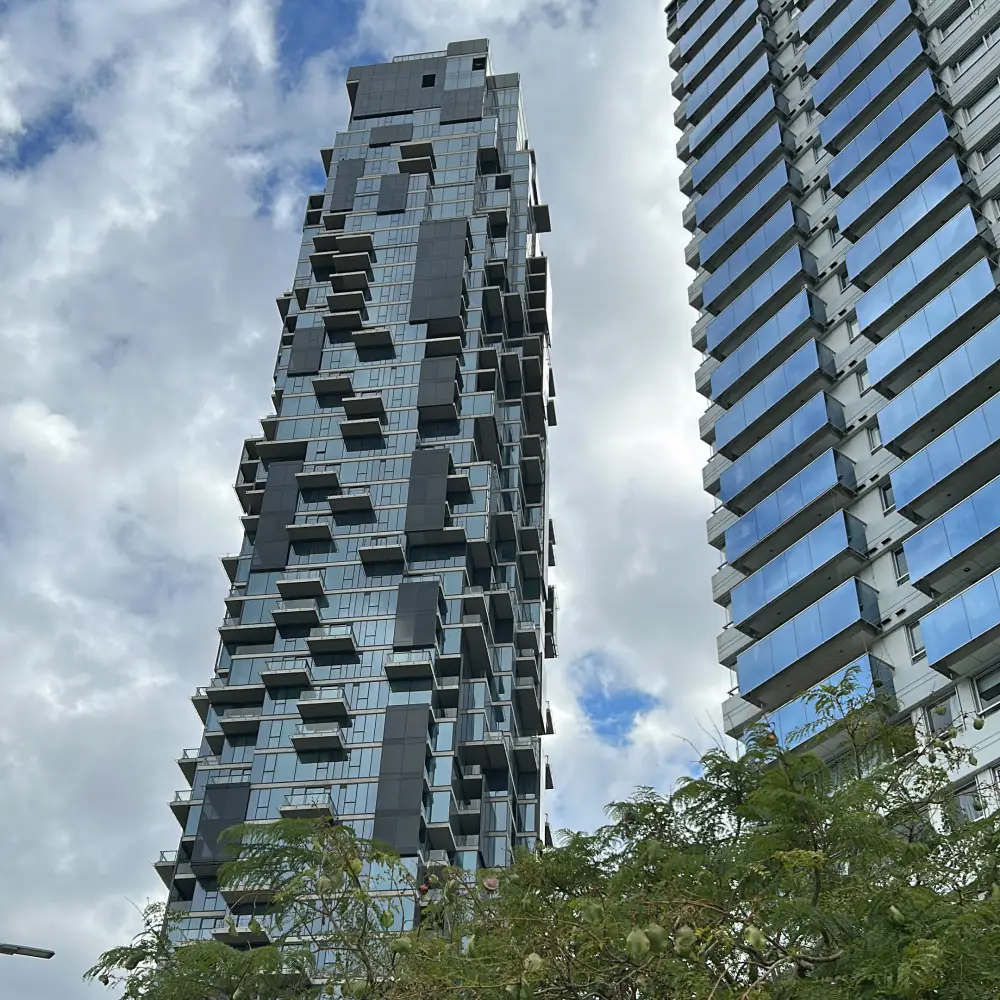
- El penthouse ya tiene precio: salió a la venta por US$21 millones. La propiedad ocupa los pisos 52 y 53 de Harbour Tower, una de las torres del complejo Madero Harbour, en el Dique 1 de Puerto Madero. Cuenta con 674 m² de superficie residencial, además de una importante superficie destinada a cocheras y servicios. Uno de sus diferenciales es el acceso directo de los propietarios al helipuerto del Distrito Madero Harbour, algo que suma un nivel de exclusividad poco habitual en la ciudad. Diseñada por el arquitecto Carlos Ott, Harbour Tower alcanza los 194 metros de altura y 53 pisos, y reúne 217 residencias. El edificio cuenta además con unos 1.800 m² de amenities, entre ellos gimnasio, spa, piscinas, espacios de coworking, cavas privadas, parrillas, microcine y sectores destinados a eventos. La combinación de altura, superficie, ubicación y servicios convierte a este penthouse en una de las propiedades residenciales más exclusivas actualmente disponibles en Puerto Madero.
English version🇬🇧
Alejandro Ginevra: “The luxury is having time“
Puerto Madero is changing at a pace that is difficult to keep up with. You walk through the area, come back a few months later, and something new has appeared: a tower, a restaurant, a hotel, a workspace. The feeling is strange: as if another city were slowly growing within Buenos Aires.
When I started walking through what is now Madero Harbour, I wanted to understand what was happening there. Who was behind those five blocks in transformation and, above all, what had been imagined before any of this existed. The answer leads directly to the Ginevra family.
Alejandro Ginevra is a businessman and real estate developer, but his relationship with Puerto Madero began long before the neighborhood became one of the most exclusive areas of Buenos Aires. His father, Jorge Ginevra, was one of the first to invest in Dock 1, when the area was still largely unused. Where others saw empty land, he saw an opportunity.
Today, Madero Harbour brings together residences, offices, restaurants, commercial spaces, wellness facilities, a hotel and even a helipad. It is a small urban ecosystem where people can live, work, eat, exercise, meet others and take care of much of their daily life without leaving the district.
And that is where a word that runs throughout the entire conversation appears: luxury.
But not necessarily luxury understood as excess. For Ginevra, true luxury is something much simpler —and perhaps, for that very reason, much harder to achieve: having time.
Time not to spend hours stuck in traffic. Time to work close to home. To exercise, eat, meet someone or run an errand without turning every activity into a journey.
There is a paradox here. Living this way, for many people, requires access to a certain level of economic privilege. And in a city marked by deep inequalities, time can also become a form of privilege.
So what are we really buying when we buy square meters in places like this? A property? Comfort? Security? A particular way of life? Or, to some extent, the possibility of getting back hours that would otherwise be lost commuting?
As we walk through Madero Harbour, Ginevra talks about the future with the same ease with which he talks about the past: new buildings, hotels, projects in Punta del Este, developments in the south of Buenos Aires and new forms of mobility.
But perhaps the most interesting part of the story comes before all of that: the ability to look at a place when it still seems empty and imagine what it could become.
Who is Alejandro?
A.G.: That’s a good question. I’m a good person, a family man, a good husband, a good friend, a good son. I always start with family because I grew up in a family environment, a traditional middle-class family that gradually grew, but always respected the origins of what an Italian family is: grandparents, pasta, Sundays.
For me, it is very important to be someone who respects family, respects friends, respects his word and respects his commitments. Sometimes I get upset because, in Argentina, where we depend so much on external factors, the commitment one has made can get lost. It frustrates me when I can’t fulfill things I had committed to because of external factors, regulations or changes made by the government. If you’ve committed to certain things and can’t fulfill them because of third parties, you accept it, but it affects me quite a lot when it comes to making decisions.
And then, well, to be a successful businessman and have a peaceful life. I don’t care whether I eat a hamburger, duck pâté or caviar. It makes absolutely no difference to me. I’m a simple person, like any other human being. Sometimes I love coming home and making myself some eggs, pâté with tomatoes. I have no problem with that.
I like sports. I like to stay busy all the time. I watch a lot of news, read a lot of newspapers and follow the news. I try to stay informed. I’m interested in knowing what’s happening in the world, in our country, in politics, the economy and real estate. I try to stay very informed and I live a normal, simple, quiet life.
“I had the best university: working in Once”
His education in the real estate business did not begin at a university, but in the family office.
“I had the best university there is: working in Once,” he says.
He started by doing everything: paperwork, showing apartments, taking and returning keys, organizing files. At the time, the company mainly worked with commercial properties, and all the information was kept in a physical filing system, organized manually by street.
He was 18 and learned by observing.
“If you want to learn about commerce, you have to be there,” he says.
The learning was direct, everyday and without much theory: getting to know the stores, talking to business owners, understanding what they needed and, above all, learning how to look.
What did you learn from your father?
A.G.: My father was my first school. He left home at eight in the morning and came back around nine at night. He worked Saturdays and Sundays, and many times we would visit properties as a family. We were always working.
But my father didn’t just teach me how to do business. He taught me about life first: how to live, enjoy life, play sports, play, be outgoing. And then, work.
Those three things have always been very important to me: work, family and friends.
Before talking about shopping malls, I learned to look at street-level stores. My father and I would discuss why one business could be worth more than another even if they were practically right across from each other.
We would look at whether a sidewalk got sunlight in winter, whether the property was on a corner, whether there was a bus stop, how pedestrian traffic moved or even whether a newspaper stand could block a store’s visibility.
These were details that could change the commercial value of a property. And I learned to pay attention to all of that.
The key wasn’t just the property itself. It was understanding how people moved and what a business owner needed for their business to work.
How has the way people buy and sell properties changed?
A.G.: More than four decades ago, selling an apartment required a great deal of patience. Ads were placed in newspapers, mainly Clarín or La Nación, and they were expensive. A two-room apartment could have one major selling point: something as simple as “river view.”
Then came the fieldwork.
On weekends, you had to sit in the apartment, newspaper under your arm and a Coca-Cola beside you, and wait. There were weekends when nobody came.
And if the doorbell rang, you had to go downstairs, open the building door, go back upstairs and show the property.
There were no cell phones, WhatsApp, real estate portals or social media. Classified ads and personal contacts were practically all the tools we had.
And what role did your mother play in that story?
A.G.: My mother was always there. She was my father’s partner and accompanied him on visits and in decisions, even at important moments such as choosing the land in Puerto Madero.
It was another time and, within an Italian family, women were often relegated to a secondary role. But my mother was there, accompanying every stage.
And even today, she is someone I consult a lot. Whenever I have to make an important decision, I listen to her and involve her.
The company I inherited from my parents also carries a great deal of her: that constant and fundamental presence of someone who was always by our side.
MADERO HARBOUR
Madero Harbour occupies five blocks and brings together residences, offices, restaurants, wellness spaces, a hotel, a helipad and commercial areas within the same district.
“First came street-level stores, then shopping galleries, then open-air galleries, commercial corners and finally shopping malls. Then mixed-use buildings came along,” he explains.
The transformation also reflects a change in the way people consume.
“You used to go to the shopping mall because you had to buy something. Today, shopping has to be more enjoyable.”
In an era of e-commerce and virtually unlimited choice, simply selling is no longer enough. You have to create an experience: good restaurants, parking, spaces to meet, walk around, exercise, go to the movies or take care of other needs.
“That’s what mixed-use is: a lot of things that ultimately make you buy.”
That is why, he argues, Madero Harbour could not simply function as a giant shopping mall. The real product is the ecosystem.
“We could have built a huge shopping mall without any of the buildings. It wouldn’t work.”
The 15-minute city
Ginevra talks about the concept of the “15-minute city,” where everyday needs —work, shopping, dining, healthcare, education and entertainment— should be accessible within a short distance.
Puerto Madero, he says, already has much of that ecosystem concentrated within a relatively small area: offices, restaurants, theaters, museums, hospitals, the Ecological Reserve, the docks, downtown Buenos Aires, Retiro and Aeroparque.
He lives there himself and hardly needs to leave.
The conclusion almost becomes a definition of contemporary luxury:
“The luxury is having time.”
In a city defined by traffic, spending an hour and a half getting somewhere and another hour and a half getting back is no longer simply a mobility problem. It becomes a loss of everyday life.
“You can’t buy time. So living close to everything means having that luxury.”
And an inevitable question emerges: if time is one of the most valuable things we have, to what extent can money bring us closer to something that, in reality, cannot be bought?
Who is the Madero Harbour customer?
A.G.: The first customer of a real estate development is the investor. Today, the square meter competes with other forms of saving: dollars, stocks and financial instruments. But in Argentina, property retains a particular characteristic: it also works as a form of wealth preservation.
Then comes a second question: who is going to use that property?
Among renters, there are many young people, many of them connected to the companies and corporations located in and around Puerto Madero, with strong purchasing power.
Among those who buy to live there, we see other profiles: families from the southern part of the city who decide to leave a house because of security concerns; couples whose children have become independent and who prefer to move from a large house into an apartment; or people from the western suburbs who keep a weekend house or live in a gated community and want to be closer to the city during the week.
Our customer base extends from Avellaneda, Quilmes, Lanús and La Plata to Ramos Mejía, Castelar and different parts of the western suburbs.
We have very few customers from the northern part of the city.
What are they looking for when they choose Madero Harbour?
A.G.: We want people to be able to take care of much of their everyday life without having to leave the district.
You have a supermarket, offices, residences, restaurants and, soon, new outdoor commercial spaces.
It’s not just about convenience. We want to build a community. It’s like your own little world: a place where you can work, live, eat, meet people, exercise and take care of many of your everyday needs.
I think that’s where cities are heading: toward urban ecosystems capable of concentrating different activities and reducing travel.
After so many years developing in Argentina, how do you see the current moment?
A.G.: Recently I was talking to a friend from school. We’re both around 60, and he told me it’s the first time in his life that he has seen a country getting organized.
For many years, different governments identified structural problems but were unable to move forward with the necessary changes. I believe the current government had something previous governments hadn’t achieved: the determination to move forward with a reform program.
That’s my personal view, of course. But after decades of going through different economic cycles, crises and changes of direction, you learn to look at Argentina also in terms of its ability to plan ahead.
I’m not saying we’re in the best economic moment today. For me, the real estate business is still facing a difficult environment. Costs have increased, margins have narrowed and transactions require a different structure.
I’ve made more money under another government than I have under this one.
For years, many international companies looked at Argentina and simply ruled it out.
Today, they are beginning to compare. Before, they would say, “Argentina? No way.” Today they say, “Let’s look at Argentina. What they’re doing isn’t so bad.”
I also expect a second movement: the return of Argentine capital.
For years, many Argentine businessmen chose to buy properties in Miami or Madrid. I understand the reasons: you have capital and you want to invest it somewhere where nothing unexpected is going to happen.
And the recovery doesn’t end with the company or the investor. The chain has to continue.
If investment comes in, companies will grow. If companies grow, they will need to hire. And if new jobs are created, that should ultimately benefit workers.
The role of the State is to find that balance and especially help those who are still going through the most difficult part of the transition.
The Club Atlético Huracán
When the conversation turns to politics, Ginevra draws a line. He does not currently imagine himself holding public office, although he acknowledges one deeply personal exception: Huracán.
And this is where he becomes emotional.
“As a human being, I would love to be president of the club I love,” he says.
But he immediately comes back down to earth. He still feels he has a lot to contribute to his companies.
His connection with the club, however, goes beyond sports. He talks about Huracán’s architectural heritage and, especially, its Art Deco stadium, a unique piece of Argentine sports architecture.
That is where he is willing to contribute. He is interested in thinking about how to restore, expand and preserve the club’s headquarters, stadium and training center.
The problem, he admits, is structural: clubs are broke.
For Ginevra, the debate over sports corporations starts from a reality he considers impossible to ignore: football is no longer just a sport. It is also a business.
“Football has become a business, so football clubs have to be run like businesses,” he argues.
In his view, a club should first be sustainable and profitable and then compete athletically.
He does not necessarily believe there is only one model. There are countries where investors can buy a significant stake in a club and others where different structures operate.
What he considers necessary is professional management and a structure that allows institutions to become sustainable.
Although he closely follows politics, Ginevra does not imagine his future there.
“I’m more interested in the role I have,” he says.
There is a practical reason behind that decision: being an entrepreneur allows him to preserve personal spaces he considers valuable —travel, free time, family and friends.
“Politics is very demanding. You have to really value politicians,” he says.
The helipad
The presence of a helipad at Madero Harbour did not come from a conventional market study. It came from observation.
Ginevra remembers being in São Paulo for a meeting and watching helicopters constantly taking off and landing. The scene stayed with him.
“I have to do this in my project,” he thought.
São Paulo showed him an extreme model: a city with unbearable traffic and a huge number of helicopters used to overcome distances.
Buenos Aires, by contrast, still has different conditions, but Ginevra understood that air mobility could become part of a development like this.
Once again, the idea connects with his definition of luxury: not simply having something exclusive, but saving time and making transportation easier.
A few months ago, he met with a Chinese group interested in developing passenger flights using drones in Argentina, and he does not rule out Puerto Madero becoming part of that new mobility network in the coming years.
If you could redesign Buenos Aires from scratch, what would you do first?
A.G.: I would remove Aeroparque.
I would turn that land into a huge urban master plan, with residences, offices, commercial spaces and new areas for people to gather.
The goal would be to give the city back one of its greatest assets: the river.
A Buenos Aires that looks more toward the river, creates new urban spaces and makes use of land that he considers among the most valuable in the country.
Where do you look for inspiration when thinking about new developments?
A.G.: I don’t just look at other real estate developments. I look at cities.
Miami, Dubai, Qatar, Paris, Madrid, Barcelona, London, New York.
I’ve been traveling for decades and observing how each place built its urban identity.
Dubai holds a special place in my imagination. I’ve known it for about thirty years, when it was still very far from becoming the real estate powerhouse it is today.
What interests me is not just the scale of its buildings, but the ability to imagine a city that doesn’t yet exist.
But I also find inspiration in Europe’s historic cities. I love old architecture, the engineering behind buildings constructed centuries ago and, especially, the respect for what already exists.
We are still quite weak at that here. Many times, in order to build something new, we tear down what was already there.
Modernizing should not mean erasing. Buenos Aires could continue to grow while preserving what built its identity.
Projects
The company is also working on a project in Punta del Este that combines a hotel and residences.
But something has remained unchanged since the beginning: the curiosity to find places where there is still something to be done.
“We’re looking at a project in the southern part of Buenos Aires. I think it has enormous potential. The northern area is already too developed.”
“We transform places.”
He is not talking only about construction. He is talking about taking a territory that has not yet found its value and transforming it into something else.
“Places that nobody gives a damn about —we give them value, we transform them, and those neglected places end up becoming cities.”
For him, Puerto Madero is the clearest example.
His father invested there when there was still no certainty about what the area could become. Ginevra remembers that Argentina’s major real estate groups did not want to join that initial bet.
“My father had the ability to be the only one who believed in Puerto Madero. Then everyone else came.”
The company that began as a family business continues, in a way, under that same logic.
His wife, Mercedes, works alongside him, and his children have been preparing to continue the business.
And a new generation is already appearing: his granddaughter, still a baby, comes to Madero Harbour and Alejandro is already joking about her future:
“She should be an architect,” he says, laughing.
A US$21 million penthouse
The penthouse already has a price tag: US$21 million.
The property occupies the 52nd and 53rd floors of Harbour Tower, one of the towers within the Madero Harbour complex, in Dock 1 of Puerto Madero.
It has 674 square meters of residential space, in addition to significant areas dedicated to parking and services.
One of its most distinctive features is the owners’ direct access to the helipad at Madero Harbour, adding an unusual level of exclusivity in the city.
Designed by architect Carlos Ott, Harbour Tower rises 194 meters and 53 floors, with 217 residences.
The building also offers around 1,800 square meters of amenities, including a gym, spa, swimming pools, coworking spaces, private wine cellars, barbecue areas, a private cinema and spaces for events.
The combination of height, space, location and services makes this penthouse one of the most exclusive residential properties currently available in Puerto Madero.